
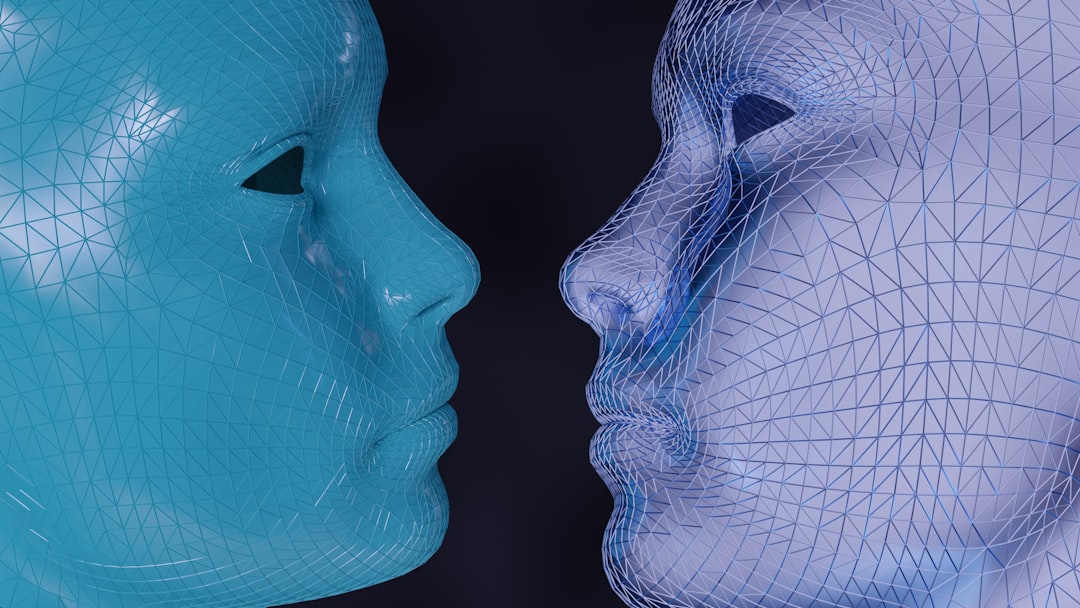
In recent years, one of the most captivating and, at times, controversial advances in digital technology has been face-swapping in videos. Once relegated to sci-fi movies and speculative fiction, the ability to seamlessly replace one person’s face with another in real-time video is now a reality. With applications ranging from entertainment to education and even security, the technologies behind video face swapping have evolved rapidly, powered by artificial intelligence, machine learning, and advanced imaging techniques.
Table of Contents
TLDR (Too long, didn’t read)
Video face swap technology leverages AI, deep learning, and computer vision to accurately map and reconstruct facial features in real-time video. Innovations in neural networks, GANs, and 3D modeling have significantly improved realism and precision. These tools are now widely used in film production, streaming apps, gaming, and more. However, ethical and privacy concerns remain prominent as the technology becomes more accessible.
What Powers Modern Video Face Swap Technology?
At its core, video face swap technology is built on a combination of several interlinked technologies:
- Deep Learning: Neural networks, especially convolutional neural networks (CNNs), are used to analyze and understand facial features and expressions.
- Computer Vision: This helps the system recognize faces in a frame, track movements, and adjust lighting and angle.
- Generative Adversarial Networks (GANs): GANs generate synthetic visuals by training two networks to compete against each other—one generates (the generator) and one evaluates (the discriminator).
- 3D Modeling: Facial geometry must be understood in three dimensions to maintain realism through head turns and expressions.
Together, these technologies allow video face-swapping tools to perform identity mapping and image synthesis in real time.
Step-by-Step: How It Works
The actual pipeline behind a face swap video typically includes the following stages:
- Face Detection: Uses trained models to locate facial features like eyes, nose, and jawline in each frame.
- Facial Landmark Extraction: 68 or more control points are mapped across a face to determine structure and expression.
- Feature Encoding: Takes in facial data and converts it into a mathematical vector representation using deep learning models.
- Face Rendering and Blending: The model synthesizes the new face onto the source’s face, adjusting for lighting, color tone, expression, and motion.
- Post-Processing: Filters and enhancements are applied to erase artifacts like color mismatch or flickering to ensure smooth playback.
The result is a polished output that looks eerily realistic to the human eye.

Important Technologies Behind the Scenes
Several groundbreaking technologies are responsible for today’s realism in video face swapping:
1. Autoencoders
One of the earliest tools used in face-swapping was the autoencoder, a two-part system: an encoder compresses input data, and a decoder reconstructs it. Autoencoders paved the way for systems to learn the structure and patterns of faces on a granular level.
2. GANs: The Game-Changer
Introduced by Ian Goodfellow in 2014, GANs revolutionized how synthetic visuals are created. Tools like DeepFaceLab and FaceSwap rely heavily on GANs to produce high-quality face overlays that are nearly indistinguishable from real video footage.
3. Real-time Inference with TensorRT
For real-time applications like live video calls or streaming, inference speed is critical. Libraries like NVIDIA’s TensorRT enable fast GPU-accelerated deployment of AI models that can run face swaps in real time without heavy lag.
4. Facial Motion Capture
Modern face-swapping tools also borrow techniques from the film industry’s motion capture systems. They replicate intricate muscle movements and expressions, even eye blinks and subtle eyebrow shifts, to keep swaps believable and synchronized.
Popular Applications and Use Cases
Face-swapping has found a home in various industries and domains, including:
- Entertainment: Deepfakes are commonly used now to replace actors posthumously or to age-deage characters in movies using realistic facial data.
- Social Media: Apps like Reface and Snapchat employ real-time facial mapping to entertain and engage users with filters and realistic facial replacements.
- Gaming: Personalized avatars that use player faces are now possible, making games more immersive and personal.
- Marketing: Brands use AI-driven video content to engage audiences with dynamic and personalized advertising.
- Education: Training simulations often use facial swapping to humanize role-play scenarios for healthcare or customer service training.

Challenges and Ethical Implications
While the tech evolution is fascinating, it’s not without its challenges. High-quality deepfakes can be used maliciously for misinformation, fraud, or privacy violations. Questions continue to arise around:
- Consent: Is it ethical to use someone’s facial data without permission?
- Security: How can we detect and prevent misuse of facial-swapping technology?
- Regulation: Laws and guidelines are still evolving to keep pace with the speed of technological change.
Organizations like the Partnership on AI and governments worldwide are now beginning to set ethical guidelines and develop detection tools to combat the potentially nefarious use of this technology.
Future Trends and Innovations
The future of face-swapping technology will likely include:
- Hyper-Realistic Swap Models: More advanced GANs and 3D rendering engines for seamless realism.
- Voice Matching: Combining face swapping with voice cloning to create fully synthetic personas.
- Cross-Device Syncing: Apps that allow live face swapping across devices, including AR and VR platforms.
- Improved Detection Tools: AI models trained to spot fake videos helping law enforcement and news organizations.
As the line between reality and digital fabrication continues to blur, society must walk a tightrope between innovation and integrity.
Frequently Asked Questions (FAQ)
- What is the primary tech used in video face swapping?
- The core technologies include deep learning, computer vision, GANs, and 3D facial modeling.
- Can video face swaps be done in real-time?
- Yes, thanks to GPU-optimized libraries and lightweight neural models, many apps enable real-time face swapping.
- Is it legal to use someone’s face in a deepfake?
- This varies by country. In many jurisdictions, using someone’s likeness without consent, especially for commercial purposes, is illegal.
- Are there tools to detect fake videos?
- Yes. Tools like Microsoft’s Video Authenticator and deepfake detection models are increasingly accurate at spotting manipulated media.
- What is the difference between face swapping and face morphing?
- Face swapping replaces one face with another, while face morphing smoothly transitions one face into another in visual sequences.