

Software engineering education is being reshaped by artificial intelligence at a speed few institutions anticipated. Classrooms, coding bootcamps, online programs, and corporate training departments are no longer teaching programming as a purely manual craft; they are increasingly teaching it as a collaboration between human judgment and intelligent tools. As a result, students are learning not only how to write code, but also how to question, guide, test, and improve code generated by AI systems.
TLDR: AI is changing software engineering education by shifting the focus from memorizing syntax to solving problems, reviewing code, and designing reliable systems. Students are using AI tutors, coding assistants, automated feedback tools, and simulation environments to learn faster and more interactively. However, educators must also teach ethics, verification, security, and critical thinking so future engineers do not rely blindly on AI-generated solutions.
Table of Contents
The Shift From Syntax to Problem Solving
For decades, software engineering education often began with syntax: variables, loops, functions, data structures, and debugging. These foundations still matter, but AI tools have changed how students encounter them. A beginner can now ask an AI assistant to explain a loop, generate an example, translate code from one language to another, or identify an error in seconds. This does not eliminate the need to understand fundamentals; instead, it changes the educational emphasis.
In many programs, instructors are moving away from assignments that simply test whether students can reproduce known patterns. They are designing tasks that require reasoning, design decisions, trade off analysis, and communication. A student may use AI to draft a function, but the real learning comes from deciding whether the function is correct, efficient, secure, and maintainable.
This shift encourages students to think like engineers earlier in their education. Instead of spending most of their time stuck on a missing bracket or unfamiliar library call, they can focus on why a solution works and when it might fail. Instructors, in turn, are becoming guides who help students evaluate and refine machine generated output.
AI as a Personal Tutor
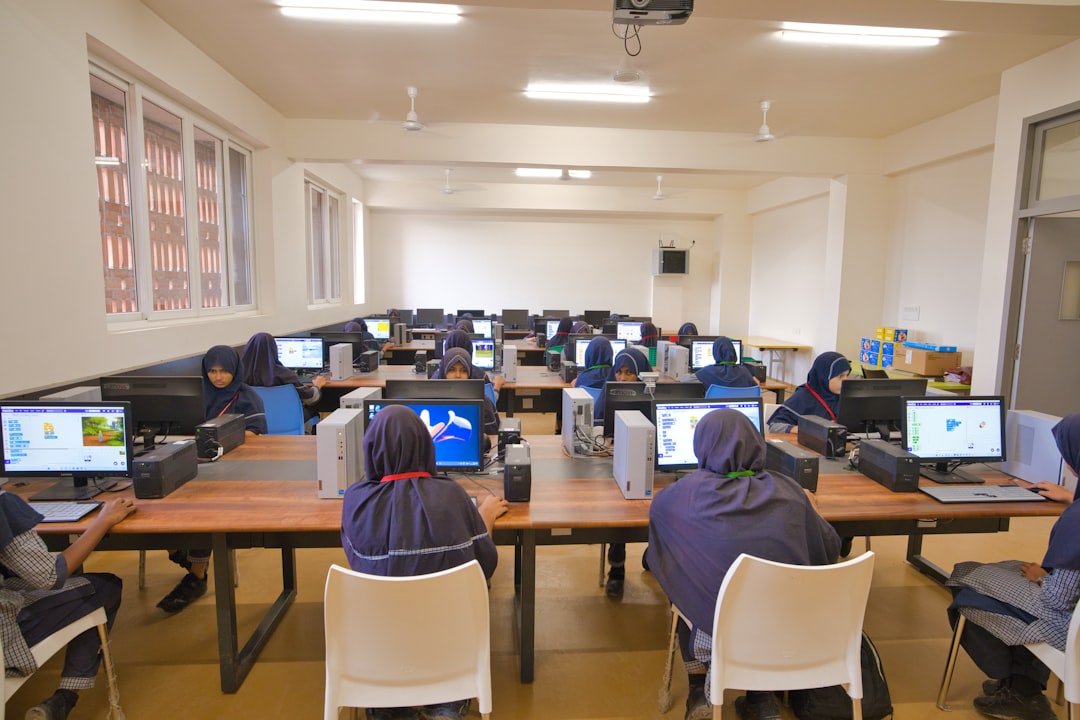
One of the most significant changes is the rise of AI as a personalized learning assistant. Traditional classrooms often face a difficult problem: students learn at different speeds. Some need more examples, while others are ready for advanced challenges. AI tutors can help bridge that gap by offering explanations, hints, practice questions, and alternative perspectives at any hour.
A student struggling with recursion can ask for a simple explanation, then a visual analogy, then sample code, then a step by step trace of how the code runs. Another student preparing for systems design can ask for mock interview questions or comparisons between architectural patterns. This level of personalization was once difficult to provide at scale.
However, educators are learning that AI tutoring works best when it is paired with structured guidance. If students ask vague questions, they may receive vague or misleading answers. Therefore, many instructors now teach students how to write better prompts, verify responses, and request explanations rather than complete solutions. Prompt literacy is becoming part of software engineering literacy.
Changing the Role of Coding Assignments
AI coding assistants can generate functions, tests, documentation, and even entire application prototypes. This has forced educators to rethink homework, exams, and project based assessment. If a student can paste an assignment into an AI tool and receive working code, then traditional grading methods are no longer enough.
Instead of banning AI entirely, many schools are choosing to integrate it responsibly. Assignments may now require students to:
- Document how AI was used during the development process.
- Explain each major design decision in their own words.
- Compare AI generated code with a manually written alternative.
- Identify bugs, limitations, or security risks in generated output.
- Write tests that prove the solution behaves correctly.
This approach treats AI as a tool, not a shortcut. Students are assessed on understanding, judgment, and accountability. In many cases, this mirrors the modern workplace, where professional developers increasingly use AI assistance but remain responsible for the final product.
New Skills for a New Engineering Environment
AI is not merely adding another tool to the software engineering curriculum; it is changing the skill set students need. Future engineers must know how to collaborate with AI systems effectively. That includes knowing what AI does well and where it often fails.
Modern software engineering students are increasingly expected to develop skills such as:
- Prompt engineering: Asking clear, specific, contextual questions that produce useful outputs.
- Code review: Reading AI generated code carefully and identifying errors or inefficiencies.
- Testing and validation: Creating automated tests to confirm that generated software works as intended.
- Security awareness: Recognizing vulnerabilities that AI tools may unintentionally introduce.
- Ethical reasoning: Understanding bias, intellectual property concerns, privacy risks, and accountability.
- System thinking: Seeing how code fits into larger architectures, user needs, and business goals.
These skills push education beyond simply “learning to code.” They prepare students to become responsible builders of complex digital systems.
AI Driven Feedback and Assessment
Feedback is one of the most important parts of learning software engineering, but it is also one of the hardest for educators to provide quickly. Large classes can generate hundreds or thousands of code submissions. AI based assessment tools can help by scanning code for errors, style issues, missing tests, inefficient algorithms, and possible plagiarism.
When used well, these tools give students faster feedback than traditional grading alone. A learner can submit code and quickly receive suggestions about readability, performance, or edge cases. This encourages iteration, which is central to real software development.
Still, automated assessment has limits. AI may incorrectly judge a creative solution as wrong or overlook deeper design problems. For that reason, many educators use AI feedback as a first layer, while human instructors focus on deeper evaluation. The best model is often a partnership: AI handles repetitive checks, and teachers concentrate on conceptual understanding, project quality, and student growth.

Impact on Curriculum Design
University departments and training providers are redesigning curricula to reflect AI’s role in development. Introductory courses may now include responsible AI use policies. Advanced courses may include machine learning operations, AI assisted software testing, natural language interfaces, and automated documentation.
Some programs are also introducing assignments in which students must intentionally critique AI. For example, a class might ask students to generate a sorting algorithm using an AI assistant, then evaluate its time complexity, memory use, and correctness. Another assignment might require students to find security flaws in an AI generated web application. These activities teach students that AI output should be treated as a draft, not an authority.
Curricula are also becoming more interdisciplinary. Because AI tools raise questions about law, ethics, accessibility, and social impact, software engineering education increasingly overlaps with philosophy, policy, design, and communication. Students are expected to understand not only how to build software, but also how software affects people.
Preparing Students for the Workplace
In professional software environments, AI assisted development is becoming common. Engineers use AI to generate boilerplate code, write unit tests, summarize documentation, explain unfamiliar repositories, and accelerate debugging. Education must prepare students for this reality.
Employers are likely to value graduates who can use AI productively without becoming dependent on it. A junior engineer who accepts every AI suggestion without review may create risk. A stronger engineer uses AI to move faster while applying human expertise to architecture, testing, maintainability, and user needs.
This means software engineering education must cultivate technical independence. Students should be able to solve problems without AI when necessary, especially when tools are unavailable, inaccurate, or restricted by company policy. At the same time, they should know how to use AI responsibly when it improves productivity.
Challenges and Risks
Despite its benefits, AI introduces serious challenges into software engineering education. Academic integrity is one of the most obvious. If institutions do not define acceptable AI use, students may be uncertain about what counts as learning, collaboration, or cheating. Clear policies are essential.
There is also the risk of shallow learning. If students ask AI to complete every task, they may pass assignments without developing deep understanding. This can create graduates who can operate tools but cannot reason through problems independently. To prevent this, educators are designing oral defenses, live coding sessions, reflective reports, and project reviews that require genuine comprehension.
Another concern is inequality. Students with access to better AI tools, faster devices, or paid subscriptions may gain an advantage. Schools must consider how to provide fair access or design assignments that do not depend on expensive tools.
Finally, AI tools can produce incorrect, biased, insecure, or legally questionable outputs. Students must learn that AI is probabilistic and imperfect. In software engineering, an elegant answer is not enough; the answer must be tested, justified, and safe.
The Evolving Role of Educators
AI does not make software engineering teachers obsolete. Instead, it changes their role. Educators are becoming mentors in critical thinking, system design, ethics, and professional practice. They help students understand what questions to ask, how to evaluate answers, and how to apply knowledge in real situations.
Teachers also play an important role in maintaining human connection. Learning software engineering can be frustrating, and AI cannot fully replace encouragement, mentorship, collaboration, or classroom discussion. A good instructor can notice confusion, adapt lessons, challenge assumptions, and inspire curiosity in ways that automated systems cannot.
The most effective educational environments will likely combine AI support with human teaching. Students receive immediate assistance from tools, then gain deeper understanding through discussion, critique, teamwork, and guided projects.
A More Practical and Reflective Future
AI is pushing software engineering education toward a more practical, reflective, and adaptive model. Students are no longer being trained only to produce code; they are being trained to supervise intelligent tools, evaluate complex outputs, and build reliable systems in a rapidly changing environment.
This transformation requires balance. If education ignores AI, it risks becoming outdated. If it embraces AI without caution, it risks weakening foundational learning. The strongest approach recognizes AI as a powerful assistant while keeping human understanding at the center.
Ultimately, AI is changing software engineering education by making it less about mechanical coding and more about engineering judgment. The future software engineer will need to be a coder, reviewer, designer, tester, communicator, and ethical decision maker. Education is evolving to meet that challenge.
FAQ
How is AI used in software engineering education?
AI is used as a tutor, coding assistant, feedback tool, testing aid, and curriculum support system. It helps students understand concepts, debug programs, generate examples, and receive faster feedback on their work.
Will AI replace software engineering teachers?
No. AI can support learning, but teachers remain essential for mentorship, deeper explanation, assessment, ethics, teamwork, and professional guidance. The role of educators is changing rather than disappearing.
Does AI make learning to code unnecessary?
No. Students still need to understand programming fundamentals, algorithms, data structures, debugging, and system design. AI can generate code, but humans must evaluate whether that code is correct, secure, and appropriate.
Can students use AI for homework?
That depends on the institution’s policy. Many programs allow AI use if students disclose it, explain their work, and demonstrate understanding. Responsible use is increasingly treated as a professional skill.
What are the biggest risks of AI in software engineering education?
The main risks include overreliance, plagiarism, shallow learning, unequal access, security vulnerabilities, and unverified AI generated answers. These risks can be reduced through clear policies, strong assessment design, and explicit instruction in critical evaluation.
What skills should future software engineers learn because of AI?
They should learn prompt writing, code review, testing, security analysis, ethical reasoning, system design, and communication. These skills help them use AI effectively while remaining responsible for final software quality.